


2026 Honda Ridgeline vs. Competition – Side-by-Side Comparison
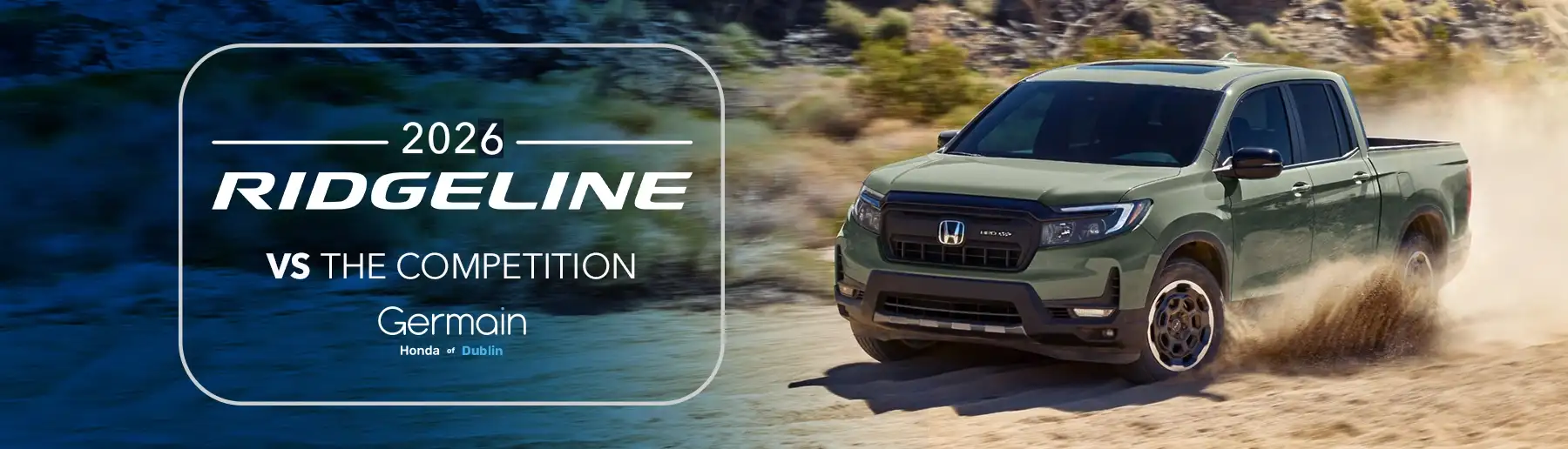
The Honda Ridgeline brings a whole new level of versatility to the midsize pickup segment. It does things that other pickups can’t. However, this is a very competitive segment and it’s not always clear what kind of advantage a Ridgeline can offer you. That’s why Germain Honda of Dublin has created a helpful comparison so you can see in detail how the Ridgeline stacks up. We’re proud to be your top destination for new Ridgeline models for sale near Columbus, OH. Check out our extensive selection of new inventory to find the Ridgeline that’s a perfect match for your lifestyle!
Honda Ridgeline vs Toyota Tacoma
 |
 |
|
|---|---|---|
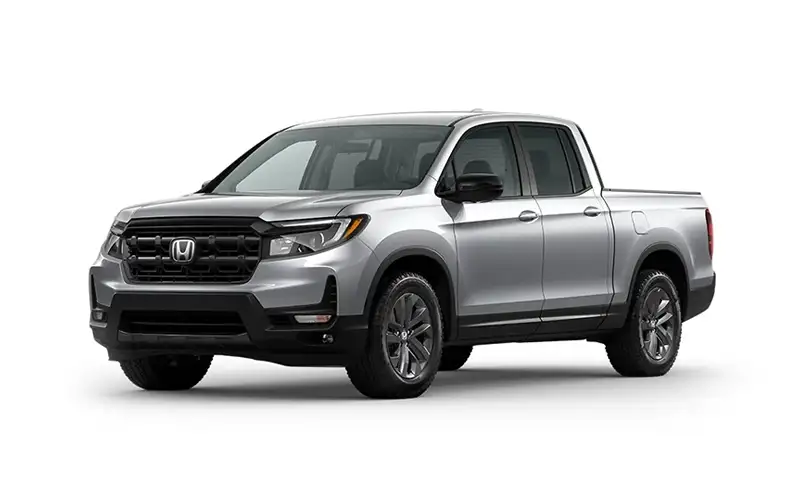
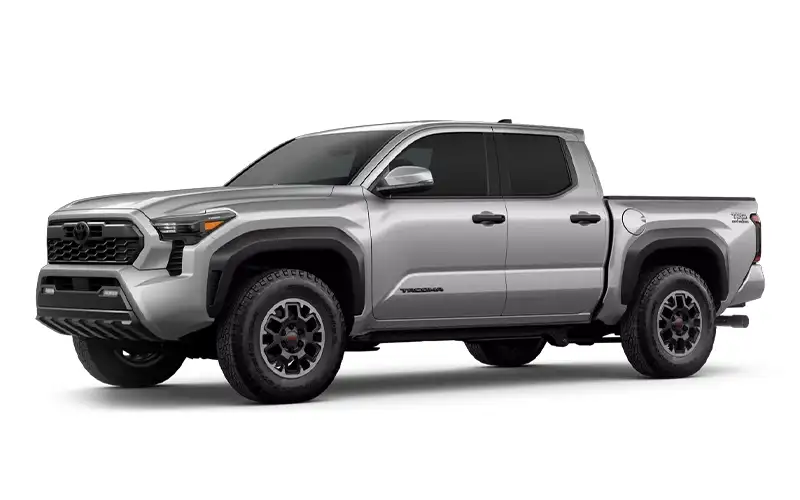
| 2026 Honda Ridgeline Sport AWD | VS | 2026 Toyota Tacoma TRD Off-Road 4×4 Crew Cab 5-Foot Bed |
| $40,795 ✓ | MSRP (excluding destination charges)* | $42,815 |
| Standard ✓ | Dual-Action Tailgate | Not Available |
| Standard ✓ | Lockable In-Bed Trunk | Not Available |
| 9 ✓ | Transmission Speeds | 6 |
| Independent Multi-Link ✓ | Rear Suspension | Leaf Spring |
| 109.7 Cubic Feet ✓ | Passenger Volume | 100.1 Cubic Feet |
| 36.7 Inches | Rear Leg Room | 32.6 Inches |
| 62 Inches | Front Shoulder Room | 58.3 Inches |
| Multi-Angle ✓ | Rearview Camera | Single-Angle |
| 5 Stars ✓ | NHTSA Crash Test Rating** | 4 Stars |
| 64 Inches ✓ | Bed Length | 60.3 Inches |
| 50 Inches ✓ | Bed Width At Wheel Wells | 44.7 Inches |
Scroll Right to View Information
First to go head-to-head with the Honda Ridgeline is the Toyota Tacoma, using the TRD Off-Road 4X4 Crew Cab with the 5-foot bed to give us the trim most similar to the Ridgeline Sport. This is a good place to start since the two trucks are so similar in terms of price, fuel efficiency, and power. Looking at the details is important to see the differences. For instance, the Tacoma sports a pretty standard bed while the Ridgeline offers standard equipment like a dual-action tailgate and a lockable in-bed trunk. These options mean a more versatile use of cargo space, giving you more options for how you use it. The bed of the Honda Ridgeline is also longer and wider between the wheel wells. This comes in especially useful for things like carrying sheets of plywood. Not only that, but AWD is also standard on the Ridgeline while the 4X4 drivetrain on the Tacoma is an optional extra.
Passenger space is one area where the Ridgeline is always a standout but when compared to the Tacoma, we can also see that passenger comfort is improved through an independent multi-link rear suspension while the Tacoma is using a less sophisticated leaf spring system. When you step on the gas, you’ll notice the advantage of the more modern and sophisticated 9-speed transmission of the Honda Ridgeline compared to the 6-speed manual offered with the Tacoma.
The last category is safety and the Ridgeline is a clear winner here too. For low-speed situations, the single-angle rearview camera of the Tacoma doesn’t measure up to the multi-angle one found in the Ridgeline. Its standard multi-angle unit gives you a far better view when backing up and a choice of views for different situations. Most importantly, NHTSA crash testing resulted in a 5-star overall rating for the Ridgeline compared to just 4 stars for the Tacoma.
Honda Ridgeline vs Ford Ranger
|
 |
|
|---|---|---|
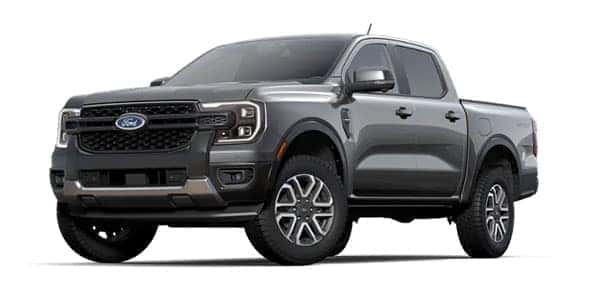
| 2026 Honda Ridgeline Sport AWD | VS | 2026 Ford Ranger Lariat Crew Cab 4×4 |
| $40,795 ✓ | MSRP (excluding destination charges)* | $47,455 |
| V6 ✓ | Engine Configuration | I4 |
| 280 ✓ | Horsepower | 270 |
| Independent Multi-Link ✓ | Rear Suspension | Leaf Spring |
| Standard ✓ | Dual-Action Tailgate | Not Available |
| Standard ✓ | Lockable In-Bed Trunk | Not Available |
| 109.7 Cubic Feet ✓ | Passenger Volume | 97.6 Cubic Feet |
| 62 Inches ✓ | Front Shoulder Room | 56.7 Inches |
| 3-Zone ✓ | Automatic Climate Control | 2-Zone |
| 5 Stars ✓ | NHTSA Crash Test Rating** | 4 Stars |
Scroll Right to View Information
Next up is the Ford Ranger with the Lariat Crew Cab 4X4 being used for this comparison, as it is the most similar to the Ridgeline. A familiar name among midsize truck shoppers, the Ranger is still a very conventional pickup. That means it lacks the versatile cargo options of the Ridgeline, such as the Dual-Action Tailgate or the lockable in-bed trunk.
Ford equipped the Ranger with a 4-cylinder turbocharged engine. So it doesn’t quite produce as much horsepower as the Ridgeline and you won’t get the smooth, linear application of power that you get from a V6 such as the one found in the Ridgeline. Another conventional aspect of the Ranger is the leaf spring rear suspension which isn’t going to offer the kind of passenger comfort you can expect from the independent multi-link system in the Ridgeline. Speaking of passenger comfort, the 109.7 cubic feet of passenger volume found in the Ridgeline offers a noticeable advantage over the 97.6 cubic feet in the Ranger.
Taking one look at the NHTSA crash test ratings of the two trucks tells us the most important safety information. The Ridgeline is rated at 5 stars, while the Ranger came home with only 4 stars. Rounding out the list of advantages for the Ridgeline is its superior tri-zone automatic climate control system.
Honda Ridgeline vs Hyundai Santa Cruz
|
 |
|
|---|---|---|
| 2026 Honda Ridgeline Sport AWD | VS | 2026 Hyundai Santa Cruz SEL Premium AWD |
| Standard ✓ | Dual-Action Tailgate | Unavailable |
| 109.7 Cubic Feet ✓ | Passenger Volume | 101.8 Cubic Feet |
| 19.5 Gallons ✓ | Fuel Capacity | 17.7 Gallons |
| Available ✓ | Truck Bed Audio System | Unavailable |
| 1,583 Pounds ✓ | Total Payload Capacity | 1,411 Pounds |
| 33.9 Cubic Feet ✓ | Bed Cargo Volume | 27 Cubic Feet |
| 64 Inches ✓ | Bed Length (Measured At The Bottom) | 41 Inches |
| 50 Inches ✓ | Bed Width Between Wheel Wells | 42.75 Inches |
Scroll Right to View Information
Last up is the Hyundai Santa Cruz, specifically the SEL Premium. This is because the base engine in the Santa Cruz lags far behind the power output of the Ridgeline and bringing the Santa Cruz up to the kind of power and towing capacity offered by the Ridgeline required optioning up. Like the Ridgeline, the Santa Cruz is a unibody pickup that offers an independent multi-link rear suspension and a cabin geared towards carrying passengers. Even with this setup, the Santa Cruz still falls short of the Ridgeline in passenger volume. For as unconventional a truck as the Santa Cruz is, it still lacks the cargo versatility of the Ridgeline which offers a dual-action tailgate. The bed of the Ridgeline is also noticeably bigger. Not just more volume, but longer and wider too, and by a big margin. That makes carrying flat items, such as plywood up to 4 feet wide, a lot easier in the Ridgeline.
The Honda Ridgeline offers a truck bed audio system which converts your entire truck bed into a big speaker for tailgating or other situations where an exterior sound system is desirable. The Santa Cruz doesn’t offer this and neither do any of the other competitors.
For all the refinement, the Ridgeline also shines when it comes to the more utilitarian tasks you want out of a truck. It has a bigger bed (not even taking into account the extra 7.3 cubic feet of storage offered by the trunk) and a larger payload capacity. It also has a bigger fuel tank, something you want if you’re hitting the trails away from a gas station. The Ridgeline excels as both a comfortable people transporter and also as a rugged truck.


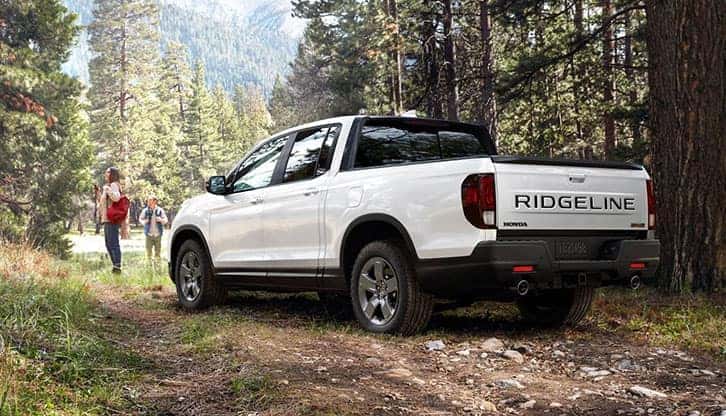
Winner – Honda Ridgeline
It’s pretty clear from the comparison that no other truck offers up quite the same versatility, comfort, and cargo storage flexibility as the Honda Ridgeline. For features you won’t find anywhere else and a safety rating that easily beats the competition, the Ridgeline is the only choice.
*MSRP excluding tax, license, registration, $1,495 destination charge, and accessories. Dealer prices may vary. MSRP does not include $455 charge for premium colors.
**18 city/24 highway/21 combined mpg rating for Sport, RTL & Black Edition trims. 18 city/23 highway/20 combined mpg rating for TrailSport trims. Based on 2026 EPA mileage ratings. Use for comparison purposes only. Your mileage will vary depending on how you drive and maintain your vehicle, driving conditions and other factors.